31 August 2026
Construction Is Slowing. Your Commercial Roof Is Still Ageing
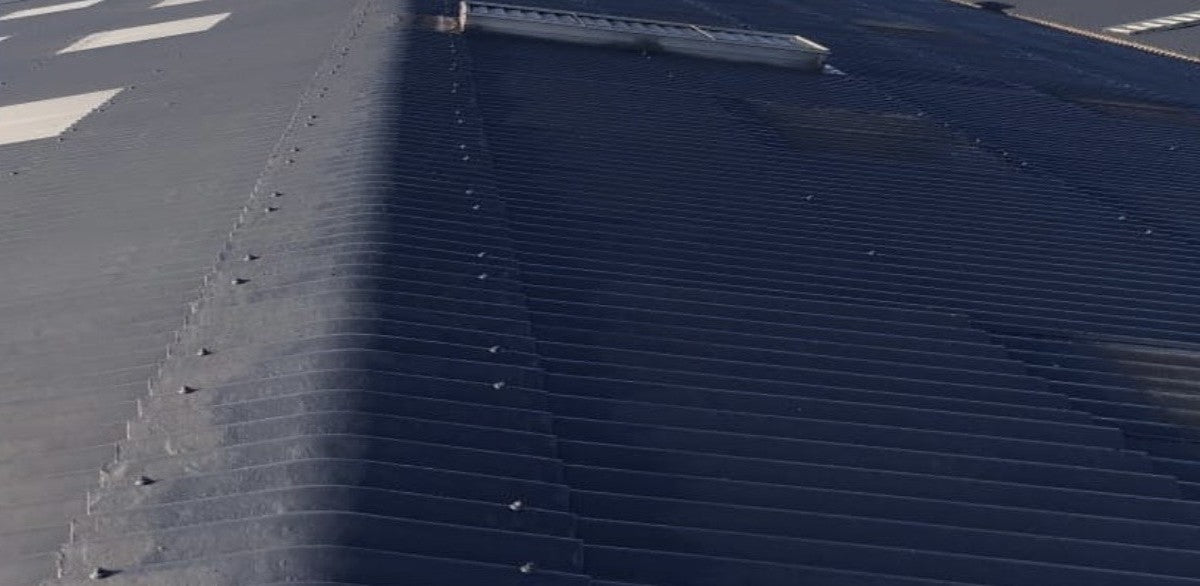
Market intelligence
A softer construction market may delay a redevelopment or full replacement, but it does not stop corrosion, water ingress, failing rooflights or drainage defects.
Deferring capital work can be sensible. Deferring it without a condition baseline, risk controls and a future trigger is not.
Direct answer
When capital budgets tighten, commercial property owners do not automatically need to replace every ageing roof. They do need evidence. A condition survey can separate urgent weathering and safety work from items that can be phased, then compare repair, refurbishment, overcladding and replacement against the building’s required life and operating risk.
Why this matters to owners of existing buildings
Monthly construction figures can weaken while the condition of an occupied warehouse, factory, office or public building continues to deteriorate. Roof coverings still weather. Coatings still break down. Gutters still corrode. Rooflights still become fragile and water still finds the unresolved interface.
For an asset owner, the practical question is not whether the construction market is up or down. It is whether the building can continue operating safely and reliably through the period in which a larger capital decision is delayed.
A weaker market changes the approval case, not the condition
When confidence is lower, boards and finance teams scrutinise capital projects more heavily. A complete replacement may be postponed, a redevelopment may move back or a lease decision may remain unresolved. That makes a clear roof plan more important, not less important.
The strongest business case starts with consequences: interruption to production, damaged stock, tenant complaints, unsafe fragile areas, insurer conditions, repeated access cost and the possibility that water damage spreads into insulation, structure or internal finishes.
Four decisions every asset team should make
| Decision | Evidence required | Weak alternative |
|---|---|---|
| What must be done now? | Active defects, safety concerns, vulnerable interfaces and operational exposure | Approving whichever patch can be mobilised fastest |
| What can be deferred? | Condition, expected deterioration and a monitored review date | Assuming the roof will remain unchanged for another budget cycle |
| Which route gives the required life? | Repair, coating, refurbishment, overcladding and replacement compared against the building plan | Choosing the lowest current cost without defining the required outcome |
| How should work be phased? | Connected roof zones, gutters, rooflights, access and live-site constraints | Breaking the building into unrelated instructions that duplicate access and create incompatible details |
Refurbishment is not simply the cheap option
On a suitable roof, refurbishment can extend useful life, reduce disruption and improve weathering without unnecessary removal. On an unsuitable roof, forcing a coating or overclad solution can hide defects and postpone a larger failure.
The right question is not “How little can we spend this year?” It is “What intervention gives this building the required reliable life at the lowest whole-life risk?”
What a finance director should expect from the technical team
- A condition baseline supported by photographs and clearly stated limitations.
- A distinction between urgent, short-term and planned capital items.
- At least two viable options where the building genuinely permits them.
- The operational consequences of doing nothing or delaying each item.
- A realistic access and programme allowance rather than an unexplained square-metre rate.
- A defined review point so temporary decisions do not quietly become permanent policy.
What the latest market data actually changes
ONS reported monthly output falls in April, May and June 2026, while the wider quarterly picture was mixed. That may affect confidence, approvals and the timing of new work. It does not change whether an existing roof is leaking, fragile or approaching the end of its serviceable life.
For property owners, the useful response is not panic or denial. It is to replace reactive maintenance with a condition-led plan that can survive scrutiny from finance, operations, insurers and the people using the building.
Related TCR insight
Browse buyer guidance, technical project lessons and construction market analysis from TCR.
Explore all commercial roofing insightsRelevant TCR services
Frequently asked questions
Does a slower construction market mean roof work should be postponed?
Not automatically. The decision should follow roof condition, operational risk, required building life and the consequences of delay.
Can roof expenditure be phased?
Yes, where the survey supports coherent phases and the temporary condition between phases can be managed safely.
How can an owner choose between refurbishment and replacement?
Compare the existing structure and covering condition, required service life, thermal goals, interfaces, access, disruption, warranties and whole-life cost.
What should a roof condition plan contain?
A record of visible defects, priorities, limitations, immediate controls, viable options, budget route and a date or condition that triggers the next decision.
Official sources and further reading
Need a roof plan that fits the current capital budget?
TCR can survey the roof, identify urgent and deferrable items, compare refurbishment and replacement routes and help turn reactive spend into a staged asset plan.
Plan the next roof investment