31 August 2026
Slough’s Data Centre Boom Has No Tolerance for a “Minor” Roof Leak
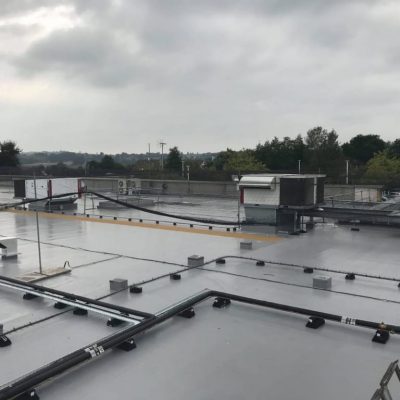
In an ordinary warehouse, a drip may stain a box. In a data centre, the same drip can trigger alarms, shutdown decisions, insurer questions and a room full of people asking who last touched the roof.
Critical equipment deserves a roof managed as critical infrastructure.
Slough Trading Estate is described as Europe’s largest data centre cluster and continues attracting specialist occupiers. Roof and cladding management should reflect that operational sensitivity. “Minor” water ingress, undocumented penetrations and difficult drainage access are not minor when continuity and resilience are part of the building’s product.
What makes a data centre roof a critical asset?
A data centre roof sits above equipment, electrical distribution, cooling and services that may have very low tolerance for water, dust or uncontrolled access. The owner needs reliable condition information, controlled penetrations, drainage inspection, fire and condensation awareness, safe maintenance routes and a detailed record of every roof alteration.
The cluster is selling resilience, whether the roof team realises it or not
SEGRO reported a third lease with a data centre services provider at Slough Trading Estate, describing the estate as Europe’s largest data centre cluster. The new 32,200 sq ft facility more than doubles that occupier’s presence while it retains another 21,000 sq ft unit.
The sector depends on connectivity, power, cooling and resilience. Roofing can be treated as conventional industrial property because the external construction may look familiar. The consequence beneath it is not conventional.
A critical facility roof should not be maintained like a shed simply because it is made from familiar materials.
Condition, access and change control need to be proportionate to the operation, not only the age of the building.
Water entry is not always where the alarm appears
Water can travel along insulation, liners, steelwork, services and cable routes before becoming visible. Internal pressure differences and airflow may also move moisture away from the entry point.
A repair based only on the drip location can therefore seal the wrong area. Investigation should consider weather direction, drainage, laps, penetrations, rooflights, wall heads and previous work. Where the interior is sensitive, testing and opening up need careful controls.
Record every new or altered opening and who approved the weathering detail.
Inspect outlets and overflows before restriction becomes an internal incident.
Do not assume all internal moisture has entered from outside.
Link photographs, repair details and locations so later teams can understand the history.
Every roof alteration needs change control
Data centre and support operations evolve. Cooling, extract, backup systems, cable routes and security equipment may create new roof requirements.
The contractor completing one penetration may not understand the wider vapour, fire, drainage or warranty strategy. A controlled process should confirm the location, support, kerb, weathering, internal protection, inspection and update to the asset record.
Emergency operational work can pressure teams to proceed quickly. That makes the approval route more important. The roof should have known principles for temporary and permanent penetrations so speed does not mean improvisation.
Maintenance must fit the operational controls
Roof inspections may involve security approval, escorts, restricted photography, limited working areas and protection of sensitive intake or exhaust systems. These controls should be planned, not discovered when a contractor arrives.
Permanent access and clear roof zoning can reduce unnecessary movement. A condition plan can combine inspections and minor works so the building is not repeatedly exposed to separate visits.
Where a larger refurbishment or replacement is needed, the method should address internal protection, weathering sequence, noise, dust, isolation and contingency. A technically sound roof system is not enough if its installation method places the operation at unacceptable risk.
Our verdict: manage the roof to the consequence below it
“Minor leak” describes the opening, not the impact
Slough’s data centre economy is built around resilient infrastructure. The roofs above those facilities should receive condition data, change control and handover evidence that match the operational expectation.
The cost of understanding the roof is small beside the cost of discovering it during an incident.
TCR carries out commercial and industrial roof surveys, refurbishment, replacement, overcladding and cladding work in Slough and across the UK. We can review the envelope around operational constraints and help define a controlled scope before works begin.
Relevant roofing and cladding routes
Frequently asked questions
How should a data centre roof leak be investigated?
The investigation should consider external weathering, drainage, penetrations, rooflights, wall interfaces, condensation and water travel paths, with access and testing controlled around the live facility.
Why are roof penetration records important on critical facilities?
They allow the owner to trace alterations, check weathering and fire details, protect warranties and identify which work may be relevant during a later leak or upgrade.
Does TCR carry out commercial roof surveys in Slough?
Yes. TCR carries out commercial and industrial roof surveys, refurbishment, replacement, overcladding and cladding work in Slough and nationally.
Official sources
- SEGRO: data centre services company expands at Slough Trading Estate — Published 28 May 2026.
This is independent commentary on publicly available information. Total Cladding and Roofing Ltd is not claiming appointment to, endorsement by or involvement in the named development unless expressly stated elsewhere.
Responsible for a critical roof in Slough or elsewhere in the UK?
Send TCR the roof information, facility constraints, known defects, previous repairs and access controls. We can discuss a survey, investigation or planned roofing scope suited to the consequence below.
Send the project detailsBrowse more analysis for commercial property and construction decision makers.
View all TCR insightsThe article is general commercial and technical commentary, not a substitute for a project-specific survey, design, structural assessment or specification.