31 August 2026
Overcladding Is Not a Shortcut: What Clients Should Demand Before Approving It
Industry opinion
Overcladding can be the right answer for an ageing industrial roof, but only after the retained roof, structure, moisture, drainage and live-site risks have been properly assessed.
Clients should not approve overcladding because it is quicker to price or easier to sell. They should approve it because the evidence shows the existing building can support a reliable new roof system.
Direct answer
Industrial roof overcladding is suitable where the existing structure and roof can safely support the proposed build up, defects are understood, drainage and interfaces can be resolved, and the new system can be installed with appropriate fire, condensation, access and warranty controls. It is not suitable merely because removal is inconvenient or expensive.
Project evidence: overcladding worked because the constraints were designed in
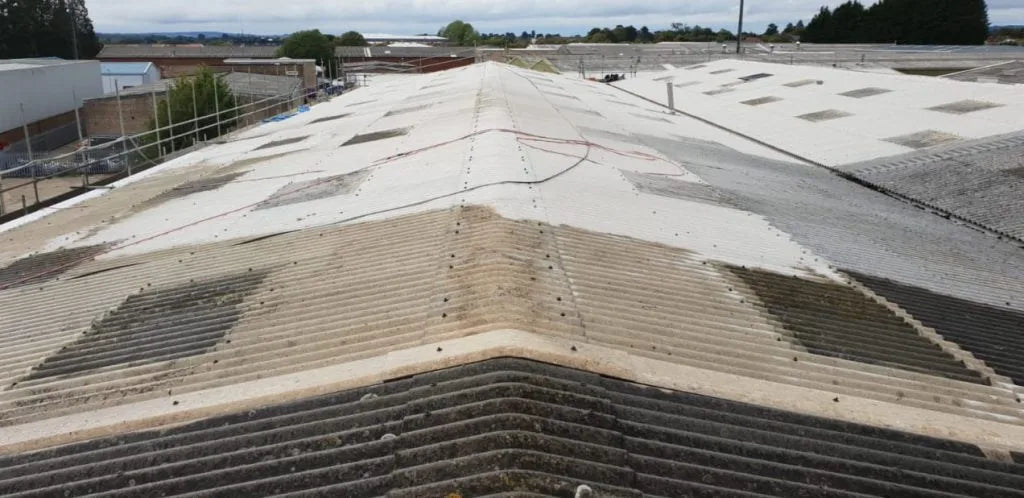
An anonymised industrial client needed an ageing asbestos-cement roof upgraded while the facility remained operational. The overclad route was credible because condition, access, drainage, insulation and live-site controls were treated as one project.
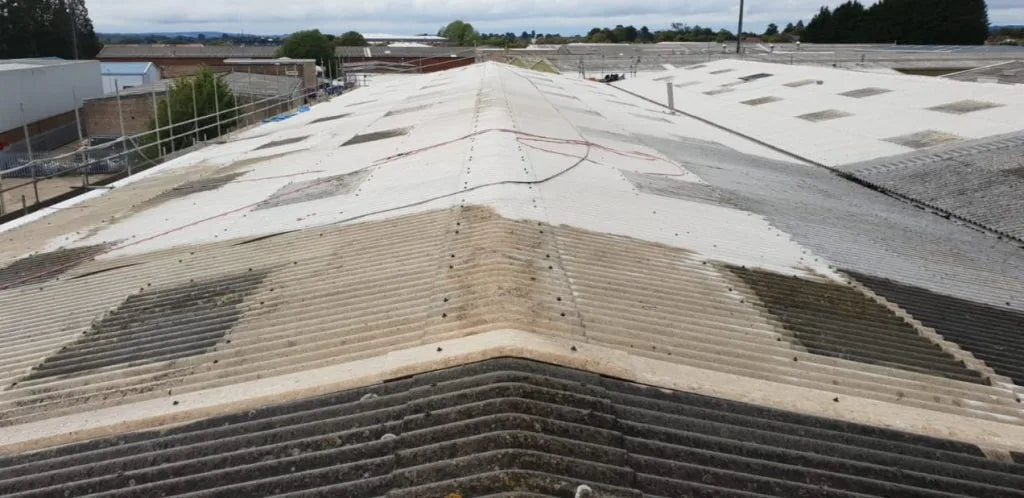
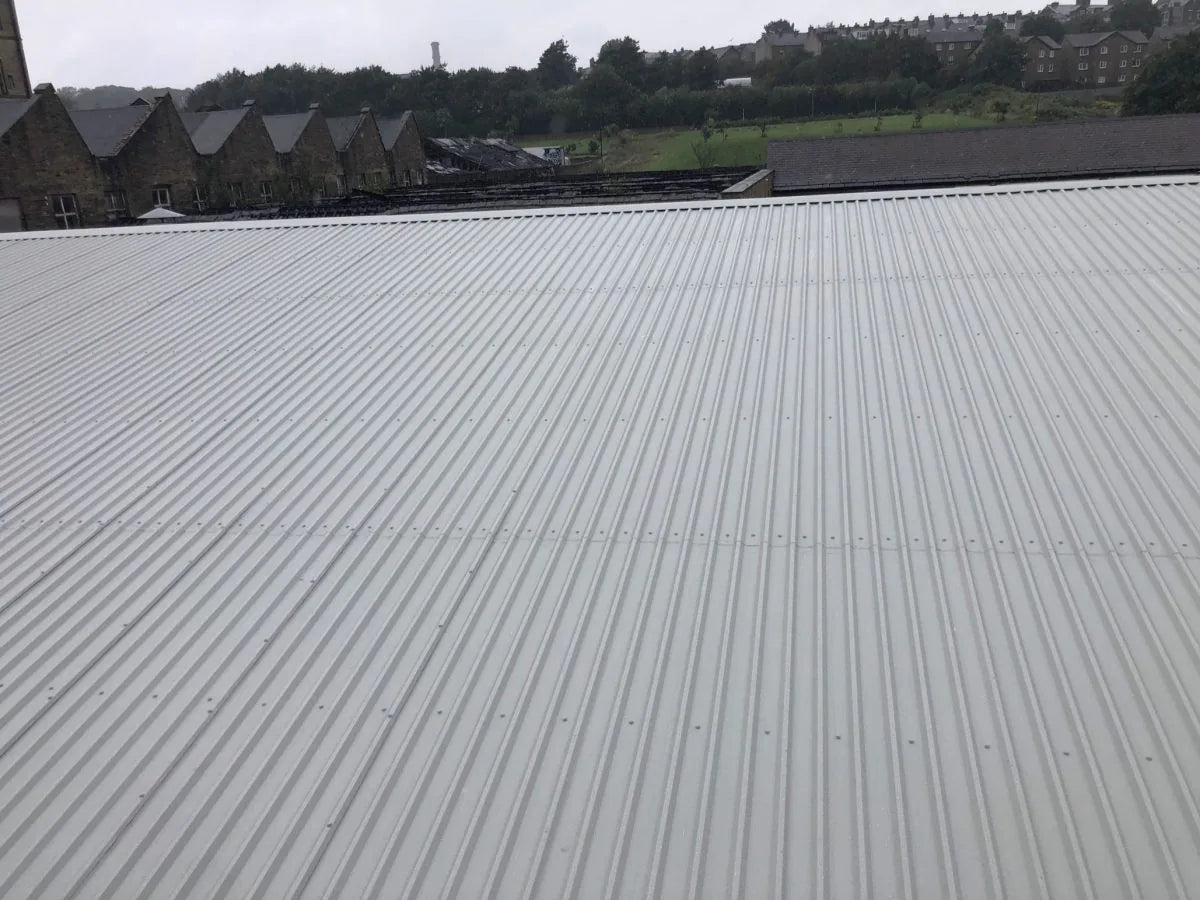
This is not evidence that every asbestos-cement roof should be overclad. It shows why suitability and delivery planning must come before approval.
Why overcladding is so easy to sell
The sales story is attractive: keep the existing roof, add insulation and a new weathering sheet, avoid major internal disruption and extend the building life. On the right project, that story is true. TCR has delivered overcladding for operational industrial clients precisely because it can reduce removal, exposure and programme risk.
The problem is that “overclad it” is sometimes presented as a conclusion before anyone has investigated the existing roof. That reverses the correct order. The building should determine the solution, not the preferred sales product.
What has to be known before overcladding
- Structural capacity: the existing frame and purlins must be assessed for the additional permanent and imposed loads.
- Existing sheet condition: corrosion, damaged fixings, cracked fibre cement, wet insulation and failed laps cannot be ignored.
- Condensation risk: the proposed build up must manage vapour and thermal performance rather than trap moisture.
- Drainage: gutters, outlets, valleys and overflows must remain accessible and capable of handling the revised roof geometry.
- Rooflights and penetrations: daylight, fire performance, kerbs, vents, flues and services require coordinated details.
- Fire and insurance requirements: the system and its components must suit the building use and the client requirements.
- Access and fragility: the installation method must protect operatives and people below throughout the works.
When the existing roof becomes part of the risk
Once a new roof is installed above the old one, the retained layer has not disappeared. It becomes part of the permanent build up. If it contains widespread corrosion, damaged asbestos cement, trapped moisture or unstable components, those conditions can affect installation, inspection, maintenance and future alteration.
Overcladding is not a moral choice between “green” retention and “wasteful” replacement. Sometimes retaining the existing roof avoids unnecessary waste and disruption. Sometimes removal is the honest route because the retained materials cannot support a reliable long term solution.
A six week live site project taught the right lesson
On an anonymised industrial project, the client needed an asbestos cement roof upgraded while the business remained operational. A planned six week overclad programme gave the client a cost effective route that improved weathering and thermal performance without turning the building into a full removal site.
The lesson was not that overcladding is always quicker. The lesson was that it becomes efficient when the existing roof is properly assessed, the live site constraints are designed into the method and the interfaces are resolved before mobilisation.
When we would recommend replacement instead
| Condition | Why overcladding may be wrong | Likely next step |
|---|---|---|
| Serious structural uncertainty | Additional loading cannot be justified | Structural investigation and alternative design |
| Widespread sheet failure or contamination | The retained layer creates ongoing risk | Consider planned removal and replacement |
| Inadequate gutters or drainage geometry | The new roof may worsen an existing water management problem | Redesign drainage before selecting the roof route |
| Unresolved condensation or wet insulation | Moisture may be trapped within the new build up | Opening up, testing and revised thermal design |
| Client needs a very long service life with future solar | The retained roof may limit warranties, access or future alteration | Compare full replacement against overclad whole life cost |
What a credible overcladding proposal should include
A credible proposal should explain why the existing roof is being retained, what condition evidence supports that decision, how the new system is restrained, how condensation is managed, how gutters and rooflights are treated, how fragile surfaces are controlled and what evidence will be handed over.
“Overclad” is not a complete scope of works. It is the starting description of a system that still has to be designed around a real building.
Related TCR insight
Browse buyer guidance, technical project lessons and construction market analysis from TCR.
Explore all commercial roofing insightsRelevant TCR services
Frequently asked questions
Can an asbestos cement roof be overclad?
Often, yes, subject to surveys, structural suitability, asbestos controls, fragile roof precautions and a properly designed system.
Does overcladding stop every leak?
No. Existing gutters, penetrations, interfaces and retained defects still need to be identified and resolved within the scope.
Is overcladding always cheaper than replacement?
Not always. Access, structural strengthening, rooflight changes, drainage upgrades and complex interfaces can narrow the cost difference.
How long does an industrial overclad last?
Service life depends on the selected system, environment, installation quality, maintenance, warranties and the suitability of the retained roof beneath it.
Official sources and further reading
Client confidentiality: The project example is anonymised. The client and building are not publicly identified.
Considering overcladding an industrial roof?
Send photographs, drawings, previous surveys and the required service life. TCR can review whether overcladding is a credible route or whether further investigation is needed first.
Discuss roof overcladding