31 August 2026
The Rooflights Were Never “Like for Like”: How One Phrase Can Derail a Roofing Project
Project insight
One side expected new rooflights. The written scope described covering the openings. Both thought the intention was obvious, and that was the problem.
“Like for like” is not a rooflight specification. It is a phrase that postpones every important technical and commercial decision.
Direct answer
A commercial rooflight scope should state whether each opening is being replaced, over sheeted, removed, infilled or retained; whether daylight is required; the proposed material and profile; thermal and fire requirements; fragility and access controls; internal protection; interfaces; and responsibility for final weathering. Without that detail, contractors can price technically different outcomes under the same heading.
Project evidence: rooflight work must state the outcome, not just the activity
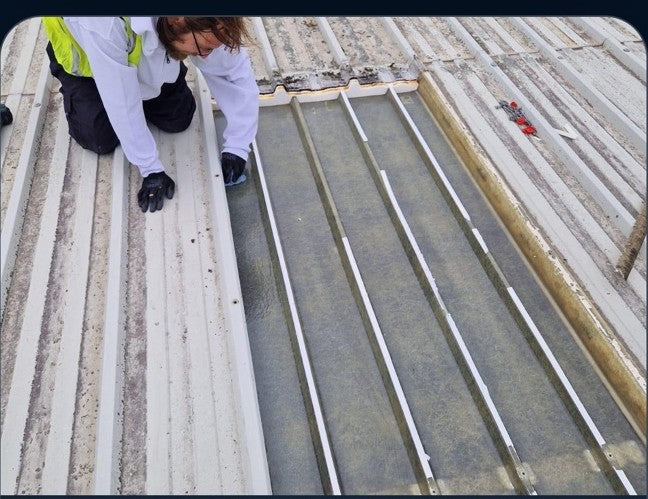
A separate anonymised refurbishment combined local roof-sheet replacement, rooflight weathering and cut-edge corrosion treatment. The useful handover showed what was retained, what was renewed and how adjoining details were reinstated.


The photographs do not replace a written scope. They show why the scope must identify every position, intended outcome and interface before the price is agreed.
The disagreement started with two different pictures
On an anonymised industrial refurbishment, the client expected a series of existing rooflight positions to be returned as rooflights. The written scope described cover sheets and over sheeting. One interpretation retained daylight. The other created opaque weathering panels. Both parties believed the intention should have been obvious.
It was not obvious because the scope described an activity without defining the required outcome. That is how a small line in a tender becomes a major cost, programme and relationship problem.
Why “replace the rooflights” is still incomplete
- Are the existing units GRP, polycarbonate, glass or another system?
- Are they in plane rooflights, barrel vaults, kerb mounted units or wall lights?
- Is natural daylight a performance requirement or simply an existing feature?
- Must the replacement match the roof profile and liner arrangement?
- What thermal, fire, non fragility and warranty performance is required?
- Are internal birdcage scaffold, safety netting, covers or crash decks needed?
- Who is responsible for trims, insulation, liners, gutters and surrounding sheet repairs?
Five technically different rooflight instructions
| Instruction | Visible result | Commercial consequence |
|---|---|---|
| Replace existing rooflight | Daylight retained with a new compatible unit | New product, removal, weathering, access and internal controls |
| Oversheet existing rooflight | Existing unit covered by another layer | May reduce daylight and requires a suitable support/detail |
| Infill opening with metal sheet | Opaque roof area replaces the rooflight | Changes internal light and may affect insulation/liner continuity |
| Refurbish rooflight | Existing unit cleaned, coated or resealed | Lower intervention but limited by substrate condition and system suitability |
| Retain and work around | Existing rooflight remains | Interfaces, fragility and warranty boundaries must be clear |
The client outcome must appear before the product
A good scope starts with the outcome: retain natural daylight, improve thermal performance, remove fragile elements, stop water ingress, prepare for overcladding or eliminate redundant openings. The selected product follows that decision.
If the outcome is not written, contractors will fill the gap with assumptions. Some will choose the lowest cost interpretation. Others will allow for the most robust route. The tender totals will then look inconsistent because the building outcomes are inconsistent.
The programme implications are often larger than the material difference
Rooflight work affects internal operations. Removing units above offices, production or stored goods can require segregation, temporary protection, cleaning, safety netting and restricted working windows. A change from opaque cover sheets to new rooflights can alter lead times, access and the sequence of surrounding roof works.
A rooflight variation is rarely just the price difference between two sheets. It can change the method, programme, internal risk and warranty route.
A scope wording that is harder to misunderstand
Example: “Remove the existing in plane GRP rooflight sheets at the identified positions and install new profile matched translucent rooflights, including compatible fillers, sealants, fixings, side and end laps, internal protection and final weathering. Maintain natural daylight at all listed positions. Contractor to confirm non fragility classification, product data, access method and warranty inclusion before order.”
That wording may still need drawings and site verification, but it defines the outcome and the responsibilities. It gives contractors a much better chance of pricing the same work.
Related TCR insight
Browse buyer guidance, technical project lessons and construction market analysis from TCR.
Explore all commercial roofing insightsRelevant TCR services
Frequently asked questions
Does “like for like” have a standard roofing meaning?
No. It can refer to appearance, dimensions, material, performance or function. The intended outcome should be stated explicitly.
Can existing rooflights be covered instead of replaced?
Sometimes, subject to design, weathering, fire, condensation, access and the client accepting the loss or change of daylight.
Should every rooflight be surveyed individually?
For substantial replacement or refurbishment, a schedule by position or type is valuable because dimensions, profiles and defects can vary.
Who should define rooflight performance?
The client team and designer should state required outcomes. The specialist contractor and manufacturer can then develop and confirm the suitable product and detail.
Client confidentiality: Based on an anonymised TCR client project. The client, site and correspondence details are not identified.
Is the rooflight scope genuinely clear?
Send the drawings, schedule and proposed wording. TCR can review the rooflight interfaces, expected outcome and any points that need clarification before pricing.
Send the scope for review